Ekiti 2026: APC Wins All 16 LGAs — What This Tells Us About Ekiti Politics
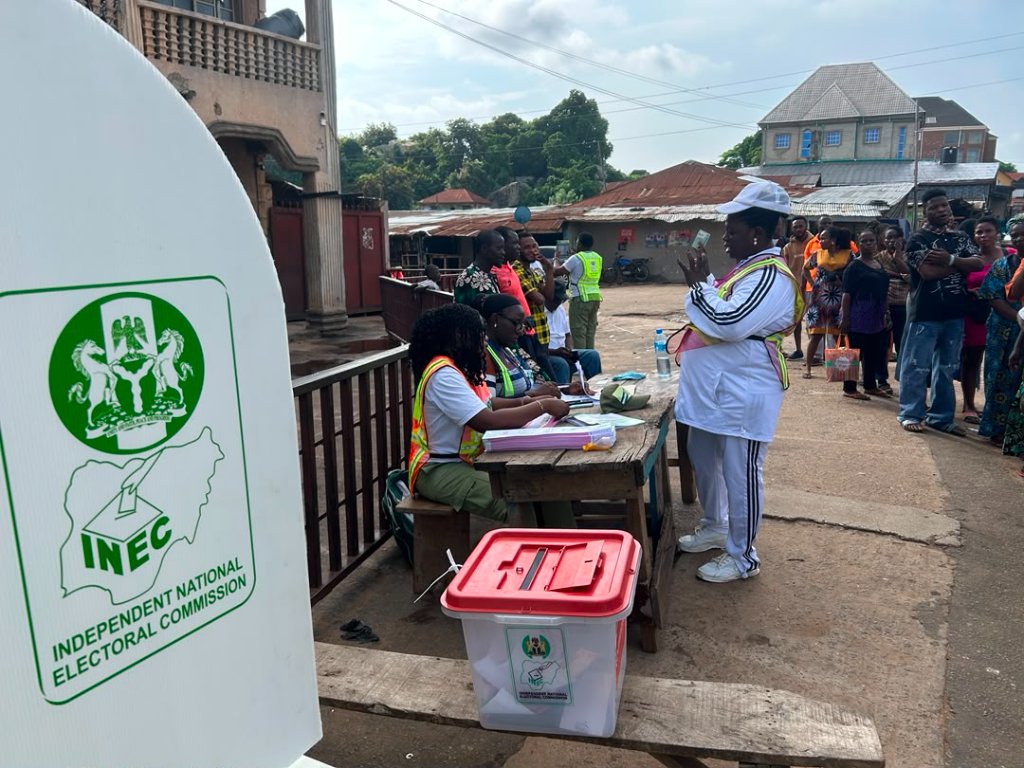
The final numbers from the Ekiti 2026 governorship election are striking in their uniformity.
APC: 319,224 (83.4% of valid votes) PDP: 40,543 (10.6%) ADC: 12,872 (3.4%) All others combined: Under 3%
A candidate winning all 16 Local Government Areas in a gubernatorial election is exceptional by any measure. The last time this happened in Ekiti State was Ayo Fayose's 2014 landslide — a different party, a different era, the same fundamental truth about Ekiti political culture.
Become a Verified Election Agent
Join thousands monitoring polling units across Nigeria in 2027.
Why Ekiti Is Different
Ekiti State is Nigeria's most educationally homogeneous state: the highest concentration of teachers, professors, and education-sector workers relative to population of any state in the federation. This produces a distinctive political culture — more ideologically oriented, more policy-sensitive, and historically more volatile — than states where patronage networks purely dominate.
The political science term for Ekiti's electoral behavior is "pendular" — the state swings dramatically between parties across election cycles, depending on performance and perception of the incumbent. APC won 2014 (Fayemi), lost 2014 (Fayose), won 2018 (Fayemi), won 2022 (Oyebanji), won 2026 (Oyebanji) — the pattern is not one-party dominance, but performance-based electoralism.
What Oyebanji Got Right
According to post-election feedback from Watch Nigeria Elections field agents and community observers across all 16 LGAs, several factors contributed to the scale of the victory:
- Salary consistency: Ekiti State workers have received salaries consistently under Oyebanji — a non-trivial achievement given the fiscal pressures on Nigerian states
- Infrastructure visibility: Road construction projects were visible in multiple LGAs, creating tangible evidence of governance activity
- Education sector engagement: Teachers — the backbone of Ekiti's political culture — felt respected rather than adversarially managed
The Opposition's Honest Assessment
PDP and ADC came second and third respectively, but both with numbers that represent organizational baselines rather than genuine competitive challenges. ADC's 12,872 votes represent their strongest-ever Ekiti performance — a building block, not a campaign.
The question for 2027 state assembly contests is whether any of the opposition parties can build on these baselines. In Ekiti, that requires winning the ideological argument, not just deploying resources.
Covering Nigerian politics, elections, security and society. Committed to transparent, fact-based journalism for a better Nigeria.
Related Articles
 Elections
How a Nigerian Election Result Travels: From the Polling Unit to the Final Declaration
Between a vote being counted at a polling unit and a winner being declared, a result passes through several separate stages of collation, each handled by a different official and recorded on a different document. This is the chain — and it is where most disputes about Nigerian elections actually happen.
 Elections
How Nigerian Political Parties Choose Their Candidates: A Guide to Primaries
Before a general election, there is an internal one. Party primaries decide who actually appears on the ballot — and the rules governing them are set in law, not just in party constitutions. This is how candidate selection works in Nigeria, and why the process is often more contested than the election itself.
 Elections
Election Observers Explained: Domestic, International, and Citizen Monitoring in Nigeria
Election observers are the eyes and ears of democracy. But who are they, what do they actually do, and what is the difference between domestic, international, and citizen observers? This guide breaks down the observer ecosystem in Nigeria and explains why every type matters.